Open to new roles

IT Leader and Engineer

Sevag Bardakjian

I build IT organizations from nothing, and I still know how the network is wired.

Ex-Disney · Ex-Amazon · TikTok

teams led
4+
of people supported
Thousands
sites across multiple continents
Numerous
in annual budget owned
Millions
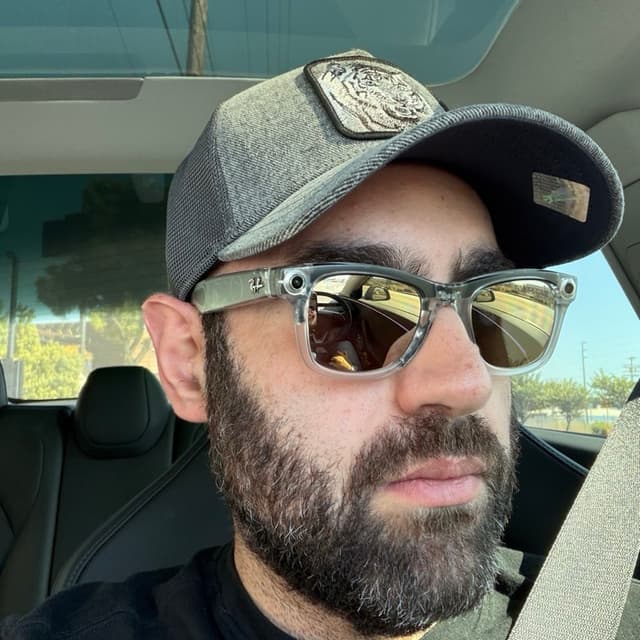
Photo of Sevag Bardakjian

01 / about

About me

I've been in IT for 20 years, the last 10 of them in leadership. I started at Disney as an intern and left as a network engineer who helped open Shanghai Disney Resort, a new Disneyland plus two resort hotels, with Disney Stores, Studios, and Parks in between. At Amazon I helped launch Amazon Books and Amazon 4-star retail locations across the US. In 2019 I landed at TikTok as a team of one. Today that's a full-fledged regional IT organization with managers reporting to me, sites on numerous continents, and a multi-million dollar budget.

My title says Head of IT Service Operations. What it means day to day is budgets, hiring, vendors, and making sure the people above me never have to think about IT. I'm on the road a lot: walking our sites, sitting down with local leaders, scoping new builds, closing out decommissions. I'd rather see it than read about it, and if it comes to it, I can still build out a site, network and servers included. I think a team should know their boss can still do the work. It changes how they listen.

The full story, company by company, is below. The short version: I build things from nothing, I don't mind the unglamorous parts, and I'm more fun to work with than this paragraph suggests.

Los Angeles, CA

After hours

After hours I'm usually in the homelab, which has quietly gotten out of hand. It started as a place to play with servers and networking. It's now a small datacenter with redundant internet, real firewalls, and containers everywhere.

Most of my time there lately goes to a GPU box running local LLMs, and to figuring out what generative AI is actually good for. The rest of the rack does the unglamorous jobs, like keeping the family's photos backed up and the smart home behaving.

The other habit is vibe coding. I build with AI coding tools, and a few of those experiments turned into real apps (SNAP, SCIFboard, STINT) that you'll find below. It's the part of the week where I get to be the engineer again.

02 / experience

The story so far

  1. 01 / 2014 to 2017

    The Walt Disney Company

    • Network Engineer (intern)

      Aug 2014 to Aug 2015

    • Network Engineer

      Aug 2015 to Jan 2017

    Where I learned to build networks

    Disney was my first real network job, and it started with a lot of responsibility for an intern: a colleague and I were the only two people running the network for every Disney Store in North America. We migrated 217 stores from DSL to MPLS and handled day-to-day network operations before either of us had a full-time badge.

    Full time, I owned the Disney Store infrastructure overhaul: 370 new access points across 120 stores in the US, Canada, and Puerto Rico, done before the holidays, under budget. Then Disney Studios, then Disney Parks.

    Then Shanghai Disney Resort: a new Disneyland and two resort hotels, built from scratch in another country. Five weeks on site getting the park network ready, and I was there for grand opening, supporting it live. Very few network engineers get to say that.

  2. 02 / 2017 to 2019

    Amazon

    Seattle

    • Support Engineer III

      Jul 2017 to Jan 2019

    Where I learned to run support

    I moved to Seattle and switched from building networks to supporting the people using them. I was on the team behind the nationwide launch of Amazon Books and Amazon 4-star retail locations, and a lot of that job happened on the road: flying across the country to physically open new stores, setting up the point of sale and price check systems in each one. I also led the project that brought ESL digital price tags to the stores.

    Back at the desk I was on call 24x7 for a retail footprint that kept growing. The number I still quote: monthly trouble ticket volume down 40% while the store count went up. Most of that came from a knowledge base I built so problems got solved once, plus new KPIs and weekly reporting to leadership so we were fixing the right things.

  3. 03 / 2019 to 2023

    TikTok

    Los Angeles

    • Sr IT Engineer

      Apr 2019 to Jul 2019

    • Regional IT Manager (NA & LATAM)

      Jul 2019 to Apr 2023

    Building the desk from zero

    I joined TikTok in 2019 as a Sr IT Engineer and was running the region within three months. There was no Service Desk yet, so I built one: recruited, trained, and mentored the team covering North and South America, and grew several of those hires into sub-regional managers. I also served as site owner for the US headquarters, including moving service desk operations out of a shared office and into the new Los Angeles HQ.

    In 2020 I launched two more verticals alongside the desk: Key Person (KP)/Executive Support, which I ran through 2024, and the Transparency and Accountability Center (TAC), which I led globally, building centers in Los Angeles, Washington DC, Dublin, and Singapore. By the end of this stretch I was running three verticals at once: Service Desk, TAC, and KP.

    This is also where the job stopped being about tickets. I started as a team of one and hired my way to a real organization, owned the IT budget and headcount plan for the region, and grew or trimmed the org as the business demanded. I ran onboarding and offboarding for every employee in the region, including executives, managed the vendors and contracts behind every site, and became the person site leaders and executives called when something mattered. I collaborated with cross-functional partners across North and South America, APAC, and EMEA so that a region could operate as one company.

  4. 04 / 2023 to present

    TikTok

    Los Angeles

    • Head of IT Service Operations (AMS)

      Mar 2023 to present

    Running the region

    In 2023 I took over Service Operations for the Americas and rebuilt the organization from the ground up. Instead of one pool of generalists, I organized it into sub-verticals so every area had proper, redundant coverage: Networking, Systems, A/V, TAC, KP, and EMDF/Server Rooms. That structure carried a run of new office launches and stood up a small datacenter/EMDF along the way. Four verticals at the top, six underneath, one calendar.

    Somewhere in here I stopped being the most technical person in the room and started being the one responsible for it. The org I started alone now has managers, sites on numerous continents, thousands of people who notice when something breaks, and a multi-million dollar budget. I set the strategy and the budget, hire ahead of the growth, deal with vendors, run leadership workshops, and tell leadership every week how the region is actually doing. And I spend a lot of time with Legal, Workplace, Security, HR, and APAC and EMEA, because the Americas should have a say when the company decides how IT gets run.

    A lot of this job happens on a plane. I travel constantly to run health checks on our sites, sit down with key stakeholders in person, scope new office builds, and close out decommissions. That circuit has taken me to San Jose, San Francisco, Palo Alto, San Diego, Seattle, Vancouver, Austin, Miami, New York, Washington DC, Dublin, London, Japan, and China. Add the TAC labs I own in Dublin and Singapore and the footprint spans numerous continents. It's the part of the role that keeps the org chart honest: you can't run that from a dashboard.

    In 2026 I moved onto Infrastructure, getting our AMS sites ready for the company's return-to-office push: making sure site reliability and infrastructure could handle a large influx of returning employees, running WiFi site surveys, and finding and repairing single points of failure. On the TAC side, I worked numerous lawsuits and legal cases.
03 / projects

Projects

Apps I'm building or have built.

STINTv1.3.1

Sev's Tiny Internet Network Tool

Shipped

A modern take on Apple's classic Network Utility, which Apple retired after Monterey. Ping with a live latency chart, Lookup, Traceroute, Port Scan, Bonjour, and the rest of the classic set in one native SwiftUI app, plus a menu bar widget and one-click export to TXT, CSV, or JSON. Free and open source under GPL v3. No accounts, no analytics, no telemetry.

  • 9 tools
  • Open source
  • Zero telemetry
  • Universal binary
  • Swift
  • SwiftUI
  • macOS 13+

SNAPv1.5.8

Sev's Network Analysis Platform

Shipped

A native macOS network toolkit. It covers the basics Apple's old Network Utility used to (ping, traceroute, port scan, lookup, whois) and keeps going from there: 35 tools built over about a year, adding what I kept wishing I had in the field.

  • 35 tools
  • 0 dependencies
  • Zero telemetry
  • All native Swift
  • Swift
  • SwiftUI
  • macOS

SCIFboard

Fleet dashboard for air-gapped labs

In progress

After 6.5+ years working in SCIF-type environments, I built the thing I always wished existed: a fleet dashboard for labs that can never touch the internet. One Python file for the server, one small agent per host, no pip, no CDN, no cloud. Hosts report CPU, memory, and disk every 30 seconds, VM inventory comes straight from the hypervisor, and there's a wall mode for a monitor.

  • Air-gapped
  • 1 file server
  • Self-updating agents
  • Rack elevations
  • Python
  • ESXi
  • Proxmox
  • KVM
  • UTM
  • Fusion
download: coming soonLaunch post ↗

04 / skills

What I run

Leading the org

The part of the job that never shows up in a ticket queue.

  • Org design and scaling (from one to a full org)
  • Budgeting and forecasting
  • Headcount planning
  • Vendor and contract negotiation
  • Executive reporting and workshops
  • Stakeholder management
  • Strategy and roadmap
  • Cross-regional leadership (AMS, APAC, EMEA)
  • Hiring and growing managers

Running operations at scale

What keeps thousands of people working across numerous sites.

  • IT service management
  • Incident and escalation management
  • Service desk and service operations
  • Site launches and decommissions
  • Single points of failure, found and fixed
  • Business continuity and return-to-office readiness
  • Onboarding and offboarding at volume
  • Executive (KP) support
  • Secure environments (TAC labs)

Still hands-on

I still deploy environments myself when it comes to it.

  • CCNA
  • Network design and architecture
  • WiFi site surveys
  • Firewalls and routing
  • VMware vSphere and ESXi
  • Mobile device management
  • Datacenter and EMDF build-outs
  • A/V and conference rooms

05 / contact

Get in touch

Email is the fastest way to reach me.